
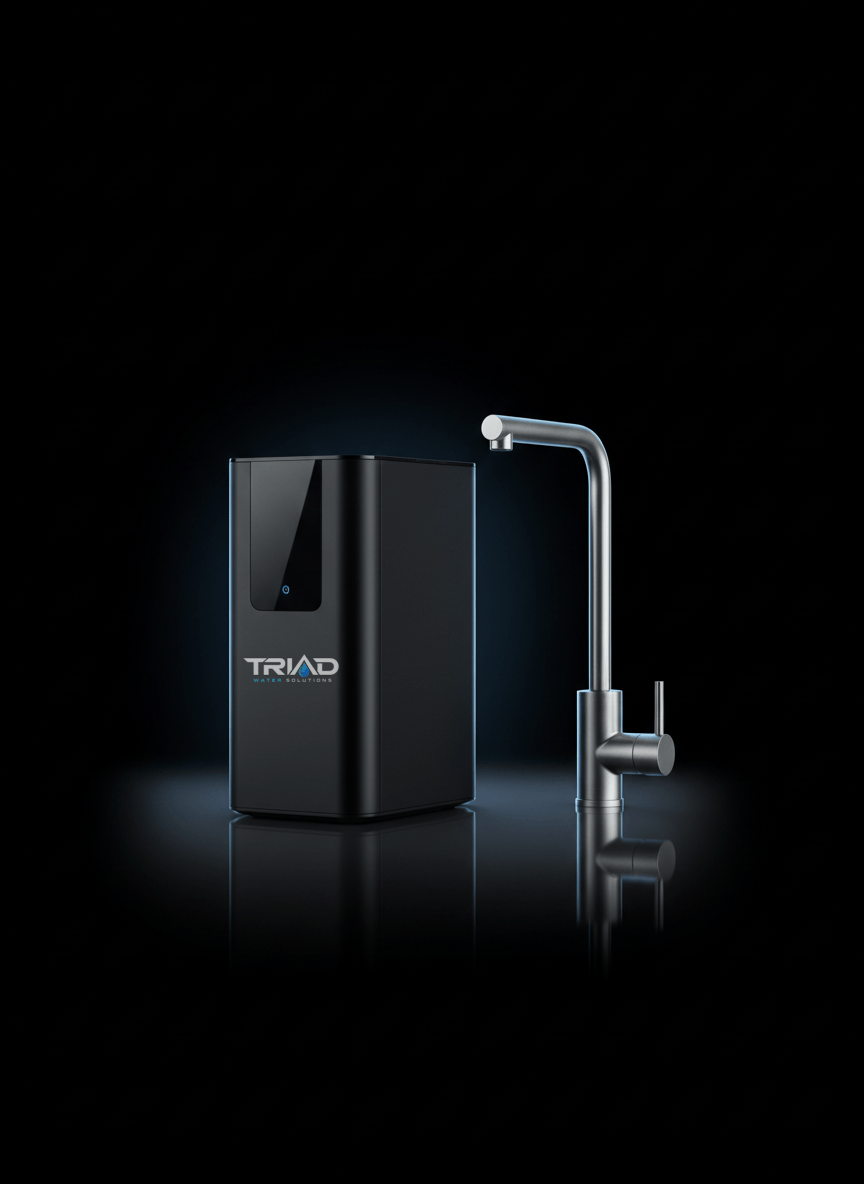
These are the two systems homeowners ask about most, and they do very different jobs. The short version: a whole-house system treats all of your water, and reverse osmosis perfects the water you drink.
Whole-house filtration (point of entry)
A whole-house system is installed where the main water line enters your home, usually in a garage, basement, crawl space, or utility area. Every drop of water in the house passes through it first: kitchen, bathrooms, laundry, and water heater.
- Removes chlorine taste and smell from every faucet and shower
- Can soften water to stop scale and spots
- Protects plumbing, fixtures, and appliances
Reverse osmosis (point of use)
A reverse osmosis system sits under your kitchen sink and feeds its own faucet. It pushes water through an extremely fine membrane that lets water through while holding back a wide range of dissolved contaminants that ordinary filters can’t catch.
- The cleanest, best-tasting water in the house for drinking and cooking
- Great for coffee, tea, ice, and baby formula
- A simple way to stop buying bottled water
Which one do you need?
If your main complaint is chlorine smell in the shower, stains, or scale, start with a whole-house system. If your main concern is what you drink, reverse osmosis is the upgrade. Many families end up with both: the whole-house system handles everything the house uses, and the RO system polishes the few gallons a day you actually drink.
Not sure where to start? Call or text (336) 775-6674 and we’ll walk you through it, or request a free quote.

