
Owning a well means owning your water quality. There’s no city plant treating it and no one testing it for you. Most well owners call us about the same three problems.
Orange or black stains: iron and manganese
Iron is one of the most common minerals in well water. It’s often invisible coming out of the tap, then turns orange-brown once it hits the air, leaving stains in sinks, tubs, toilets, and laundry. Manganese works the same way but leaves darker brown or black stains. Neither is usually a health concern at typical levels, but both are tough on fixtures and nearly impossible to scrub out completely.
Rotten-egg smell: hydrogen sulfide
That sulfur smell comes from hydrogen sulfide gas dissolved in the water. It’s often strongest from the hot water side, and it can tarnish silver and discolor fixtures. Even small amounts are easy to smell.
Gritty water: sediment
Sand, silt, and rust particles can come up with well water. You’ll notice it as grit in the water, clogged faucet aerators, or buildup in toilet tanks. Sediment also wears out valves and appliances faster.
How a dual-tank well system handles all three
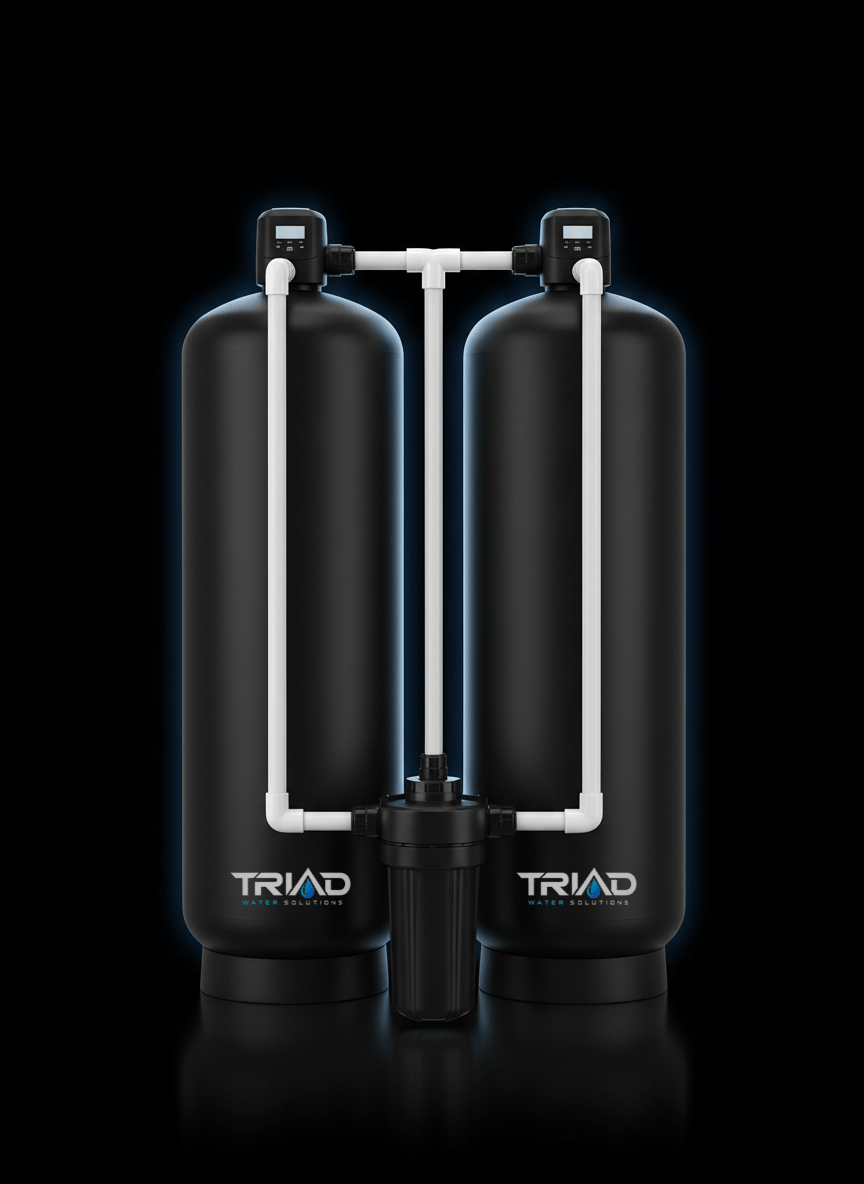
Our dual-tank well water system treats water in stages:
- A sediment pre-filter catches sand and grit first, protecting everything after it.
- Stage 1 uses Katalox Light and catalytic coconut shell carbon to take out iron, manganese, and sulfur smell.
- Stage 2 uses ResinTech CG10 softening resin to remove hardness.
Both tanks run on high-efficiency smart valves that clean the media automatically, so the system keeps working without you having to think about it.
Test your well regularly
Treatment handles the problems you can see and smell, but some contaminants have no taste, color, or odor. The EPA recommends testing private wells regularly, and your county health department can tell you how to get a test done.
Dealing with stains, smell, or grit? Call or text (336) 775-6674 or request a free quote.

