
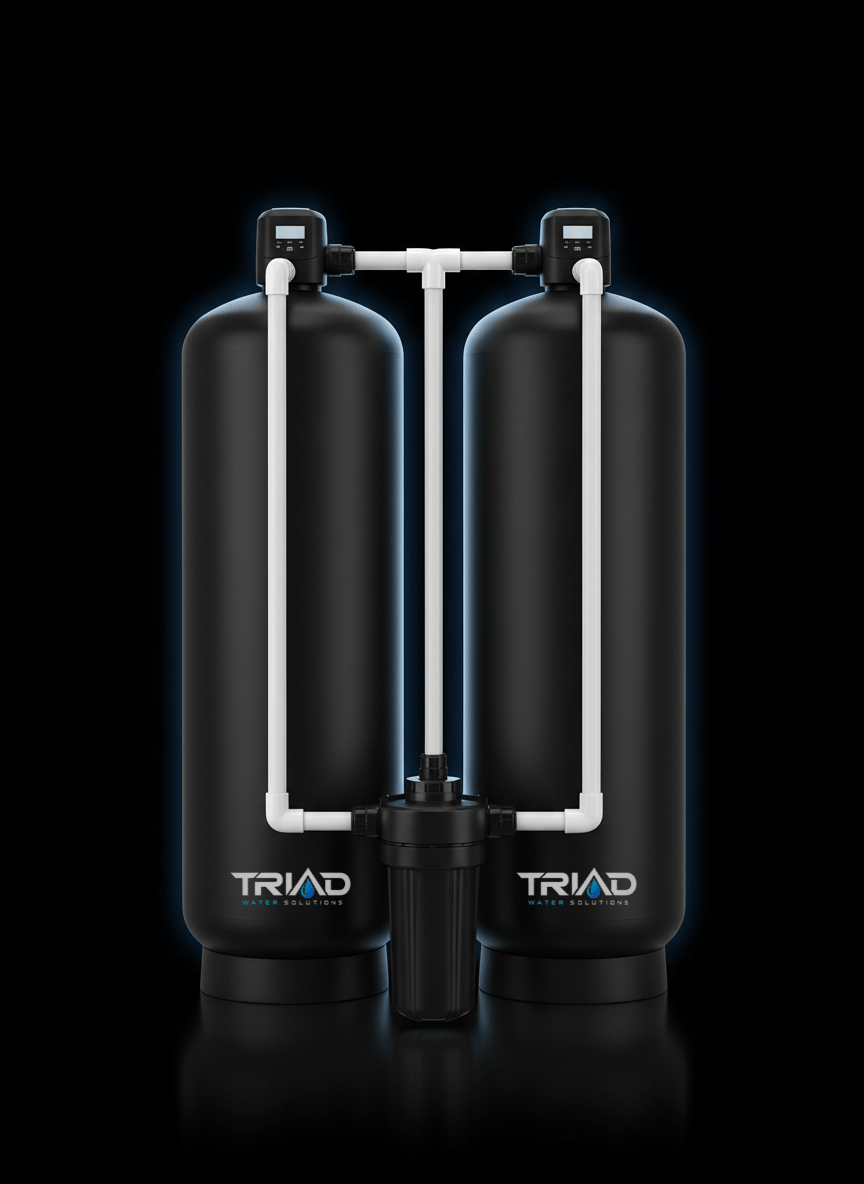
One of the first questions we ask every homeowner is simple: are you on city water or a well? The answer changes almost everything about what your water needs.
If you’re on city water
City water has already been treated at a plant and tested before it reaches you. The main things homeowners want to deal with are:
- Chlorine or chloramine. Cities add it on purpose to keep the water safe in the pipes, but it’s what gives tap water that pool taste and smell.
- Hardness. Depending on where your water comes from, minerals can leave scale on fixtures and inside your water heater.
- What happens after the plant. Water travels a long way through city mains and your home’s own plumbing before it comes out of the tap.
The usual fix: a whole-house system for city water with activated carbon, often paired with softening, plus reverse osmosis at the kitchen sink if you want the cleanest possible drinking water.
If you’re on a private well
Well water doesn’t go through a treatment plant, and no one tests it for you. Whatever is in the ground can end up in your pipes. Common well water problems include:
- Iron and manganese: orange or black stains in sinks, tubs, and toilets
- Hydrogen sulfide: a rotten-egg smell, especially from hot water
- Sediment: sand, silt, or grit in the water and clogged aerators
- Hardness: white scale, spotty dishes, and soap that won’t lather
The usual fix: a dual-tank well water system that treats iron and sulfur in the first stage and softens in the second, often with a sediment pre-filter in front.
Not sure which one you have?
If you get a water bill from your city or county, you’re on city water. If you don’t, and there’s a well pump or pressure tank somewhere on your property, you’re on a well. If you’re still not sure, just ask. We’ll help you figure it out on the phone.
Call or text (336) 775-6674, or request a free quote.

