
If you’re on city water in the Triad and your tap water tastes or smells a little like a swimming pool, you’re not imagining it. Cities are required to keep a disinfectant in the water all the way to your faucet so bacteria can’t grow in the pipes. In much of our area, that disinfectant is chloramine.
Which Triad cities use chloramine?
Greensboro uses chloramine as its standard disinfectant, and so do neighboring systems it works with, including High Point, Archdale, Jamestown, Burlington, Randleman, Reidsville, and the Piedmont Triad Regional Water Authority. Winston-Salem has used free chlorine instead. Either way, if you’re on a city system, there’s a disinfectant in your water on purpose.
You may also notice your water tastes different for a few weeks at a time. Every so often, these cities temporarily switch from chloramine to free chlorine as routine maintenance on the pipe system, then switch back. That’s normal, and it’s safe, but it’s often when people first notice the taste.
Chlorine vs. chloramine: what’s the difference?
Chloramine is chlorine combined with a small amount of ammonia. That makes it more stable, so it lasts longer as it travels through miles of pipe. The trade-off for homeowners is that it’s also harder to get rid of:
- It doesn’t boil off. Unlike plain chlorine, chloramine won’t go away by boiling water or letting a pitcher sit out overnight.
- Basic pitcher filters struggle with it. Chloramine takes more contact time with carbon to break down than regular chlorine does.
- It’s toxic to fish. If you keep an aquarium or pond, the water has to be treated before it goes in.
Is chloramine safe to drink?
Yes. City water treated with chloramine meets federal and state standards and is safe for drinking and cooking. Most people who filter it aren’t doing it because the water is unsafe. They’re doing it because they don’t like the taste and smell, or they want it out of their shower water too.
How to remove chloramine from your whole house
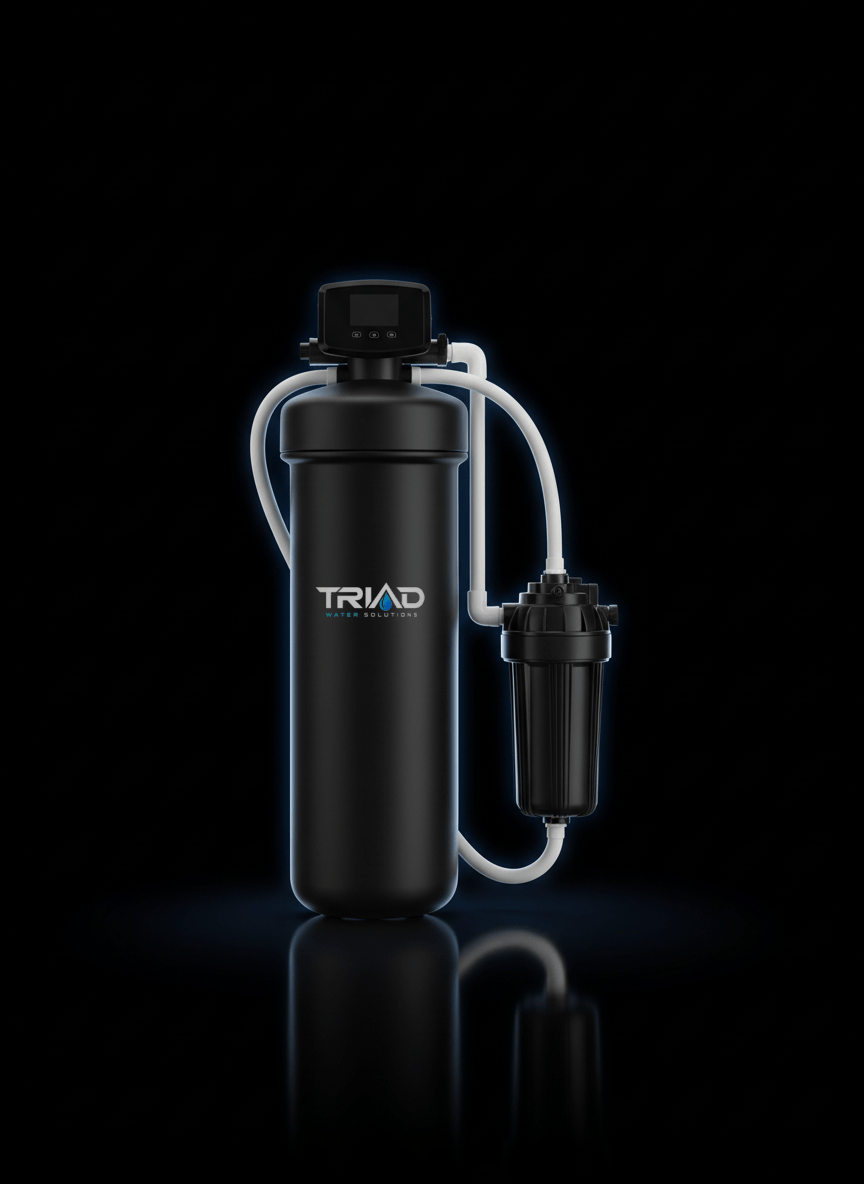
The most complete fix is a whole-house carbon system installed where the water line enters your home. Because the carbon bed is large, the water spends enough time in contact with it to break chloramine down before it reaches any faucet, shower, or appliance. For drinking water, adding a reverse osmosis system at the kitchen sink takes things a step further.
Want to know what’s in your water and what it would take to fix it? Request a free quote or call or text (336) 775-6674.

